The Race to Power AI: How Data Centers Are Adapting to Surging Demand
Rack Power
June 16, 2026
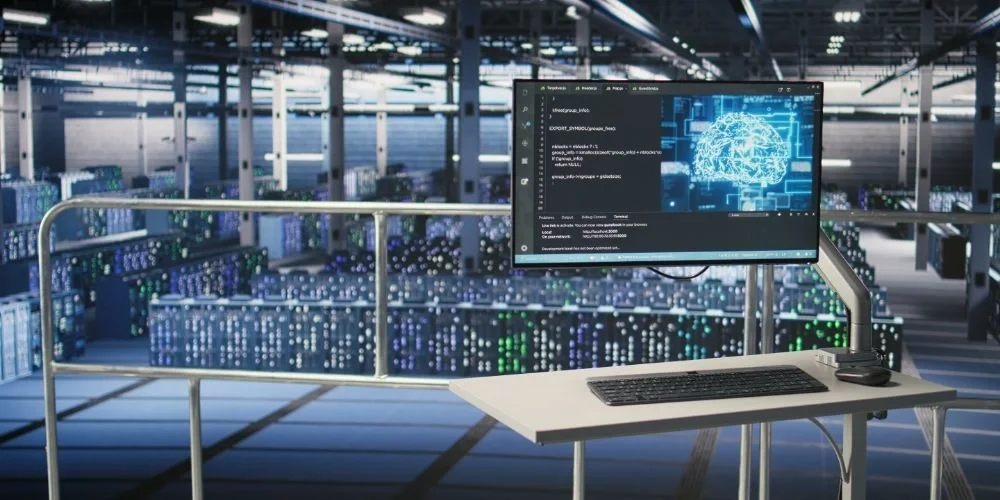
Behind every chatbot, predictive model, and AI-generated image is huge computing power—paired with enormous energy demand. As organizations race to implement AI, data centers strive to secure enough power for these high-density workloads. Due to AI, US data center power demand is projected to exceed 80 GW in 2030, according to McKinsey research. The expected surge in demand poses a significant challenge for data centers, as the grid currently lacks sufficient capacity to handle it. Increasing capacity takes time. Utilities and power distributors typically move much slower than the expected demand growth. Connecting a new data center to the grid can take years — as much as seven years in Northern Virginia's Data Center Alley.
This means that data center operators, especially hyperscalers expected to handle most AI workloads, need to be creative in securing the energy needed to support AI expansion. As a result, some unexpected moves are occurring, with Meta, Google, Amazon, and Microsoft looking to source nuclear power for their AI data centers. In one example, Microsoft has made a $16 billion deal to source power from Three Mile Island in Pennsylvania.
In other examples, to maintain grid stability in Data Center Alley and surrounding areas, West Virginia coal-fired plants that were previously scheduled for decommissioning are now expected to operate beyond their planned retirement dates. In Abilene, Texas, developers of the first Stargate data center want to build a 350MW natural gas power plant onsite to secure sufficient capacity.
These moves signal a major shift: data centers are no longer just consumers of electricity. Increasingly, they are becoming active participants in how energy is sourced, generated, and managed.
Solutions to the AI Power Challenge
AI workloads use significantly more energy than traditional computing, requiring high-density chip clusters and specialized hardware to generate text, images, graphics, and video. AI-enabled racks consume up to six times more power than traditional racks and require hybrid cooling techniques to keep things running smoothly. All of this translates to higher power consumption, which necessitates careful infrastructure planning that goes beyond just selecting compute resources.
But with grid constraints, how can data centers secure the power they need? There is no single solution. Sourcing nuclear power and putting off the decommissioning of coal plants provide some relief, but other strategies are necessary.
Some approaches are still aspirational—such as small modular reactors (SMRs), which could be deployed onsite to supply nuclear power to data centers. Other solutions that are already available include:
- Utilizing power from sustainable energy sources such as solar, wind, geothermal, and hydroelectric.
- Generating power on site with gas turbines, solar and wind systems, or modular fuel cells that use hydrogen to produce power.
- Building Battery Energy Storage Systems (BESS) onsite that store renewable power to ease the burden on the grid.
Grid modernization is also needed, but data centers cannot do it alone. However, in one example, data centers can play a role by participating in the Data Center Flexible Load Initiative (DCFlex), an initiative of the Electrical Power Research Institute (EPRI) that involves utilities, data centers, and technology companies. The goal is to accelerate grid connections by using technology that enhances grid stability and improves asset utilization.
Power Strategy Also Starts at the Rack
While utilities, governments, and hyperscalers work toward long-term energy solutions, data center teams still face a more immediate challenge: supporting high-density workloads with the infrastructure available today.
That effort starts at the rack. The first step in designing an AI rack infrastructure is to understand the workload: what level of CPU/GPU performance is needed and how many servers are needed.
Then, operators must assess whether existing power infrastructure—such as busways and remote power panels (RPPs)—can meet those demands or whether upgrades are necessary.
From there, ensuring continuous power to the systems that run a data center, such as IT equipment, is necessary. Careful considerations are needed in choosing an intelligent Server Technology Rack PDU that matches power density and outlet type requirements, ensuring proper branch protection and failover support.
Finally, evaluate phase-balancing, load monitoring, and circuit-protection needs. Investing in intelligent high-density rack PDUs that include environmental sensor support and power quality analytics at the outlet and at the PDU inlet protects uptime, productivity, and operational efficiency.
Innovation to Solve AI's Power Challenge
AI is profoundly transforming how organizations operate and how people live and work. But that transformation cannot happen without solving the power-sourcing crisis.
Addressing this challenge requires innovation, collaboration, and a continued commitment to sustainability from data center operators. It also starts by implementing technology that supports high-density AI workloads and drives energy efficiency through effective power management.
Learn how Server Technology's intelligent high-density rack PDUs help data centers balance performance, reliability, and visibility in demanding AI environments.
Thanks for your submission. One of our Power Strategy Experts will get back to you shortly.